New Chair IL GOP Grogan targets party reset: ‘I am a person who is brought in to fix broken things’
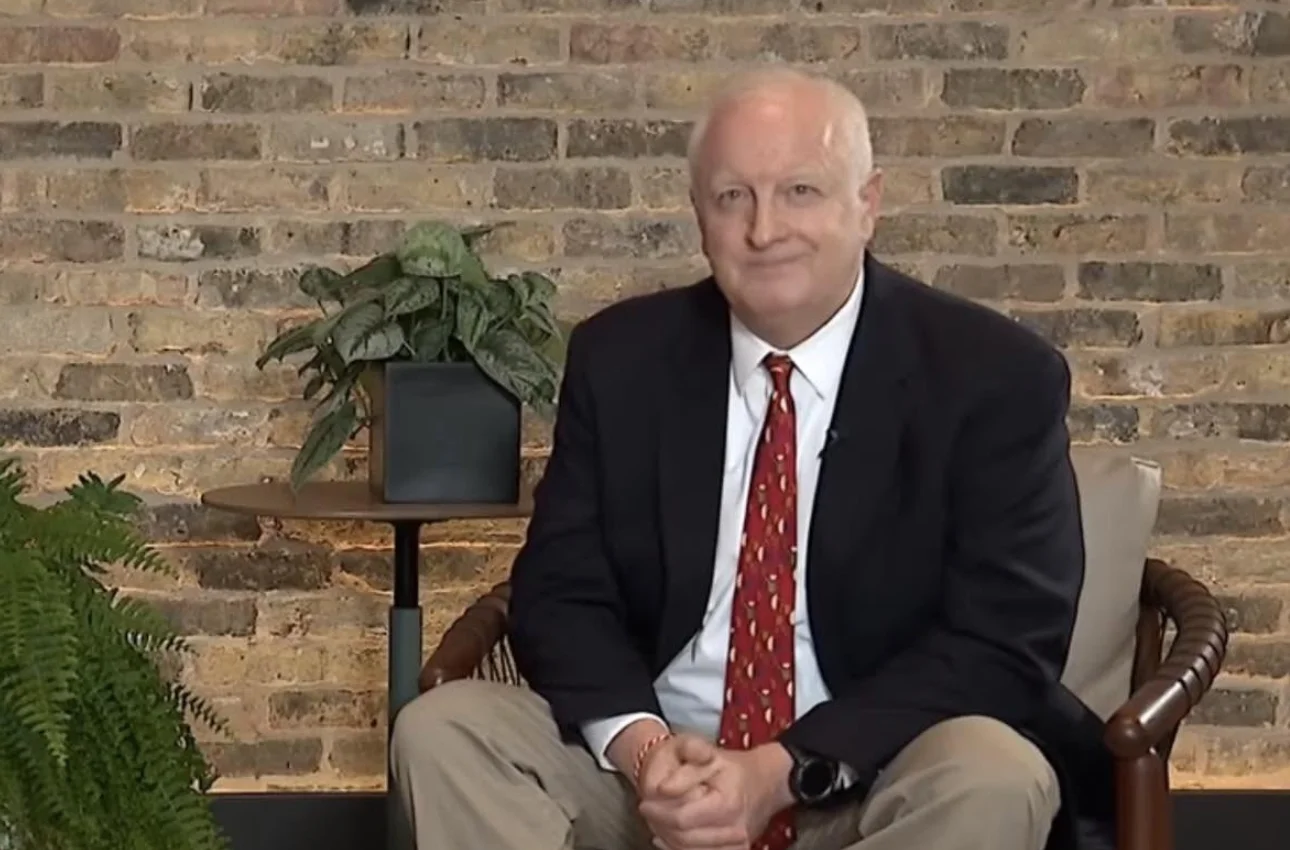
Newly elected Illinois Republican Party Chairman Bob Grogan is taking the helm of a party battered by decades of electoral losses, vowing to rebuild Republican competitiveness as campaigning for the Nov. 3 general election ramps up.
On May 18, the 58-year-old Downers Grove resident, former DuPage County auditor and lifelong DuPage County resident succeeded Kathy Salvi after her 22-month tenure.
Grogan, a Certified Public Accountant, inherits a party that has won just one governor's race in the past 26 years, lost control of the Illinois House and Senate decades ago and has steadily lost ground in once-reliable Republican strongholds like DuPage County.
Heading into the fall election, he said Republicans must boost turnout, win back former supporters and broaden the party's appeal.
“It is not only about turnout and it’s not only flipping people to our side,” Grogan told the DuPage Policy Journal. “We have to do both. And you neglect one, and you’re gonna suffer. But turnout is a big part of it, it is a challenge.”
Grogan also described long-term demographic and political challenges for the party, particularly in suburban areas, saying Republicans must broaden their appeal and address shifting voter attitudes.
He added that Republicans must improve outreach beyond traditional conservative audiences.
“I think we have to get away from some of the insider speech and speak more plainly,” Grogan said. “We have to listen, not lecture, but we also have to speak forcefully, but also speak plainly, and I think that sometimes, I like to say, we pull very well in our own echo chamber, but then we need to get outside of that and realize that everybody lives and breathes.”
In a statement released by the Illinois GOP, Grogan said he was “honored and humbled” to lead the party and emphasized unity heading into November.
Grogan, who served as DuPage County Auditor from 2008 to 2020, built his tenure around government transparency initiatives, including public financial records access, a county transparency portal and a fraud hotline. The Illinois Republican Party has said those efforts helped identify waste and abuse, producing taxpayer savings and criminal prosecutions.
“I am a person who is brought in to fix broken things,” Grogan said.
He’ll have his hands full.
Grogan is inheriting a party which has seen increasing declines over the past three decades.
Over the past 26 years, Illinois Republicans have elected just one governor—Bruce Rauner in 2014—and have not controlled the Illinois Senate since the 2002 election or the Illinois House since the 1994 election. Democrats have controlled both chambers of the General Assembly since 2003 and have held a Senate supermajority continuously since 2013, while maintaining a House supermajority for most of that period, with a brief interruption from 2017 to 2019.
“We didn’t get to super minority status overnight,” he said.
The Party’s lack of success at the statewide level has been mirrored on the local level in Grogan’s back yard as well.
DuPage County was once a core Republican stronghold delivering dominant Republican margins across federal, state and local elections and serving as a key base of GOP strength in the state.
However, in recent decades the Party’s grasp on the county has slipped.
A symbolic turning point came in 2022, when former state representative Deb Conroy was elected DuPage County Board Chair, becoming the first Democrat in at least 75 years to hold the position.
That trend has continued down the ballot.
In 2025, Democrats made broad gains in suburban township races, winning control across multiple collar counties and securing key victories in DuPage, Kane, Cook and Lake counties. In DuPage County, Democrats swept all contested township races.
Grogan says his focus is on rebuilding Republican competitiveness through broader voter outreach and organizational reform.
“We have to get back to what I describe as blocking and tackling, doing a lot of the fundamental things that I think we've neglected for a long time,” he said. “I like to describe it as, you know, we need to take back the state one neighbor at a time, actually reaching out and talking to voters, not lecturing them. You don't listen to what their concerns are. And then explaining how our policy solutions actually address their problems better than the other side.”
On messaging, Grogan pointed to economic concerns, property taxes and public policy impacts as key issues for voters, arguing Republicans must better connect policy debates in Springfield to everyday life.
“We have to actually talk to people about the real world consequences of what the Democrats are doing and the real world solutions that Republicans offer,” he said.
Grogan said the party must shift away from insider-focused politics and expand outreach beyond traditional communication channels.
“We actually have to speak a lot of different ways to get people’s attention,” he said.
He argued Republicans must better communicate across digital platforms, mail and community engagement rather than relying on a single strategy.
Supporters of those efforts say they are necessary to strengthen general election competitiveness and maintain party infrastructure.
Grogan said his focus remains on rebuilding competitiveness across Illinois while preparing the party for November’s elections and longer-term cycles ahead.He said the party must balance short-term electoral strategy with long-term rebuilding.
“You can’t just look at this November’s election. You also have to look at 28 and 30 and 32,” he said.
Grogan said the party’s efforts are divided across multiple priorities.
“We are focused on upping our game in the ballot integrity space,” he said. “We are working on upping our game as far as how our grassroots and the rest of our volunteers actually do their job.”
Grogan has first hand experience in election integrity issues. He remains closely identified with his 2020 election challenge in DuPage County, where he narrowly lost to Democrat William White by 75 votes.
“They were still counting 14 days after,” Grogan said. “I was up for 13 of the 14 days. After my election, I was up every single day until that final night on a Tuesday where I ended up being upside down by 76 votes out of a half a million.”
Grogan pursued a court-ordered recount after alleging ballot irregularities, including ballots missing election judge initials and discrepancies between ballots cast and voter totals.
A court ultimately upheld White’s victory after a full recount, reducing the margin to 58 votes. The judge rejected Grogan’s argument regarding ballots lacking required initials and ruled that state election law must be followed as written.
After the ruling, Grogan said he accepted the outcome while noting systemic concerns. In regard to election integrity, Grogan said party systems are being reviewed, including efforts to improve election judge recruitment and reduce administrative errors in elections. He described election oversight as a technical process requiring constant improvement and expanded safeguards.
“Every big process has an error rate,” he said.
Grogan added that the party is working with experienced advisers and national Republican organizations to strengthen election procedures and reduce mistakes.
He emphasized that election administration must be continuously improved.
“The goal is to push that error rate as close to zero as you can,” Grogan said. “I often I'll ask my Democratic naysayers, ‘well, how much election errors are acceptable for you?’ And the answer is, zero is the acceptable number, but also realistically, you can't demand and expect zero, but you have to constantly fight to improve the system.”
Grogan’s ascension comes as Illinois Republicans continue to grapple with internal divisions, particularly in contested primaries where critics say establishment-backed candidates receive disproportionate party support.
In recent election cycles, the party has faced criticism for spending heavily to protect incumbents from grassroots challengers in primary contests.
In 2022, under then-House Minority Leader Jim Durkin, the Illinois Republican Party directed campaign funds toward several contested primaries involving grassroots challengers.
That election cycle ended with Republicans losing five seats to Democrats in the general election, further weakening their minority status. Supporters, however, said the spending reflected routine efforts to protect incumbents and strengthen general-election prospects.
The party also provided support for incumbents in the 2026 primaries. Critics say that intervention created an unfair financial advantage, including frequent mailers and advertising they could not match.
A lawsuit alleged the party issued mailers backing several Republican primary campaigns, including Josh Higgins’ successful challenge to Deputy House Minority Leader State Rep. Norine Hammond (R-Macomb), Victoria Onorato’s campaign in District 89 targeting House Minority Leader State Rep. Tony McCombie (R-Savanna), Zachary Meyer’s campaign against State Rep. Charlie Meier (R-Okawville), and Angela Evans’ campaign against State Rep. Dave Severin (R-Benton).
Evans argued that coordinated mail programs and financial backing for incumbents distorted the races and disadvantaged grassroots challengers.
Addressing criticism that the party has favored incumbents in contested primaries through coordinated mail programs and financial support, Grogan defended the practice as standard political strategy.
"Welcome to politics," Grogan said. "There is money spent in primaries and that's just the way of the world.”
Grogan also dismissed the lawsuit, originally filed on behalf of Higgins, as “completely unfounded.” He said the party acted within its rights in how it allocates resources.
“We have to put our resources to where they can do the most good,” he said.
Grogan declined to re-litigate earlier decisions made before his tenure.
"I'm not going to get into primary stuff. We're going forward to November," he said. "The lawsuit was totally baseless. The party gets to raise money, and they get to spend money. I wasn't in charge then, and I'm not going to sit here and second-guess decisions that were made."
However, Grogan said he will keep an open mind as he continues his tenure as chair and is open to evaluating internal processes.
“There is no sacred cow that I'm not willing to look at if we could do things better," he said.