Glen Ellyn residents say spiking encounters with volatile homeless population, lack of policing 'not a compassionate answer' from the village
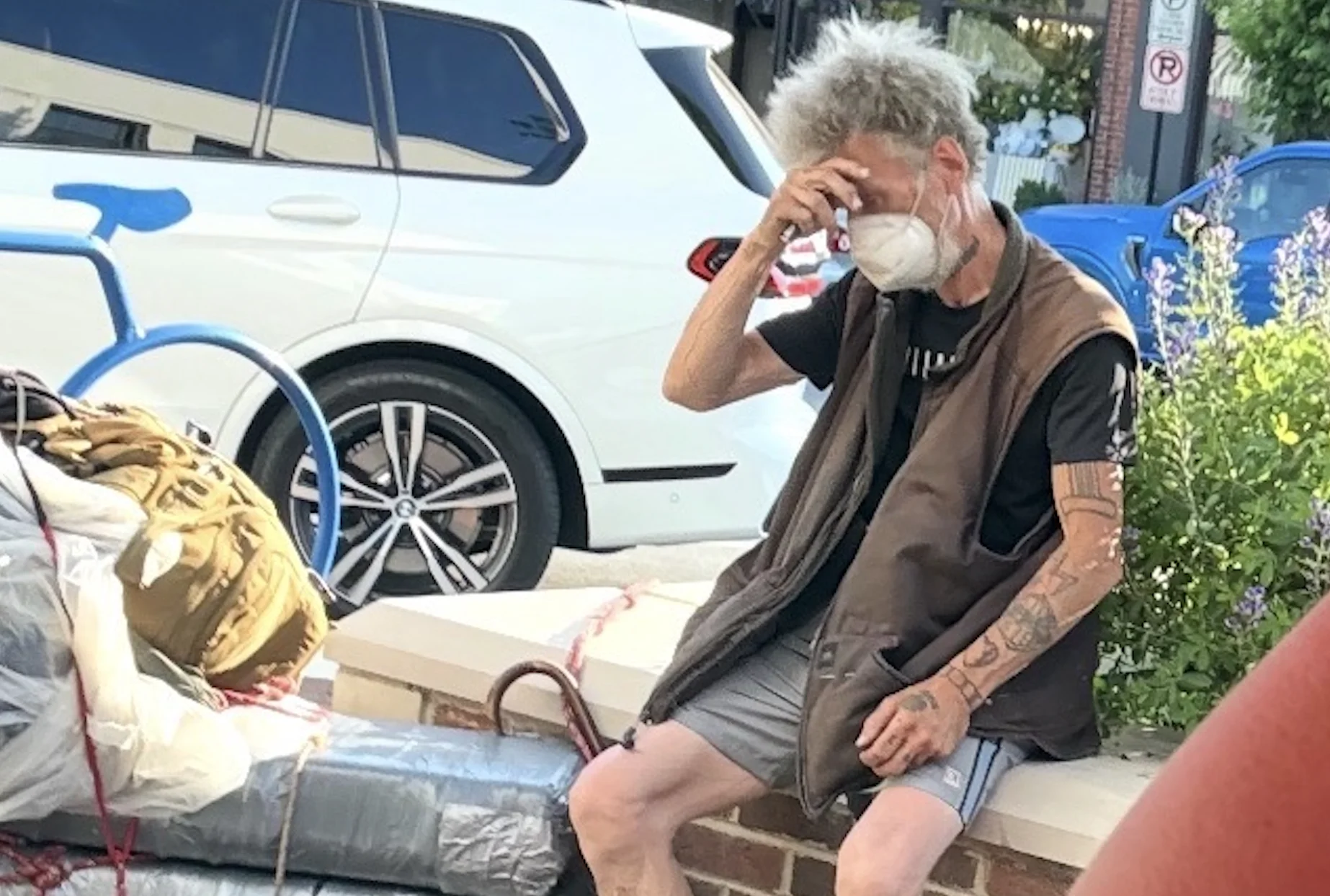
Glen Ellyn resident Lauren Trumpy said an outing with her husband in downtown took an alarming turn after a homeless man repeatedly yelled, "I will blow your brains out," outside the restaurant where they were eating dinner.
Other residents described similar encounters to the DuPage Policy Journal, saying they have witnessed homeless individuals threatening pedestrians, screaming at children and causing disturbances in the village's downtown, only for police to either not respond or decline to make arrests.
“Residents should be able to enjoy local businesses and public spaces without being subjected to threatening or intimidating behavior,” Trumpy told the DuPage Policy Journal.
"I was having dinner with my husband at A Toda Madre when a man who appeared to be homeless, and whom I have seen around our neighborhood for approximately the past month, began loudly repeating, ‘I will blow your brains out,’” she said. “A short time later, he got directly in the face of a young girl, approximately 9-years-old, and screamed, ‘Bahhhhhhh!’”
Under Illinois law, such threats, especially those regarding bodily harm, can rise to the level of illegality.
“Unfortunately, this is not the first time I have had to contact law enforcement regarding issues involving homeless individuals in our area,” Trumpy said. “I have frequently seen them throughout the neighborhood and have had to navigate around them with my children on numerous occasions.”
Per state law, acting in a way that alarms, disturbs or provokes others and disrupts public peace may be considered disorderly conduct. State law also covers public disturbances, including making excessive noise or engaging in conduct that causes public alarm.
However, residents say the Glen Ellyn Police Department, which includes 45 officers, often does not respond and when they do, no arrests are made.
The lack of aggressive policing on the issue in Glen Ellyn comes despite research showing that homelessness is closely tied to higher degree of criminality. Studies find that homeless individuals are more likely to be both offenders and victims, according to the Illinois Criminal Justice Information Authority.
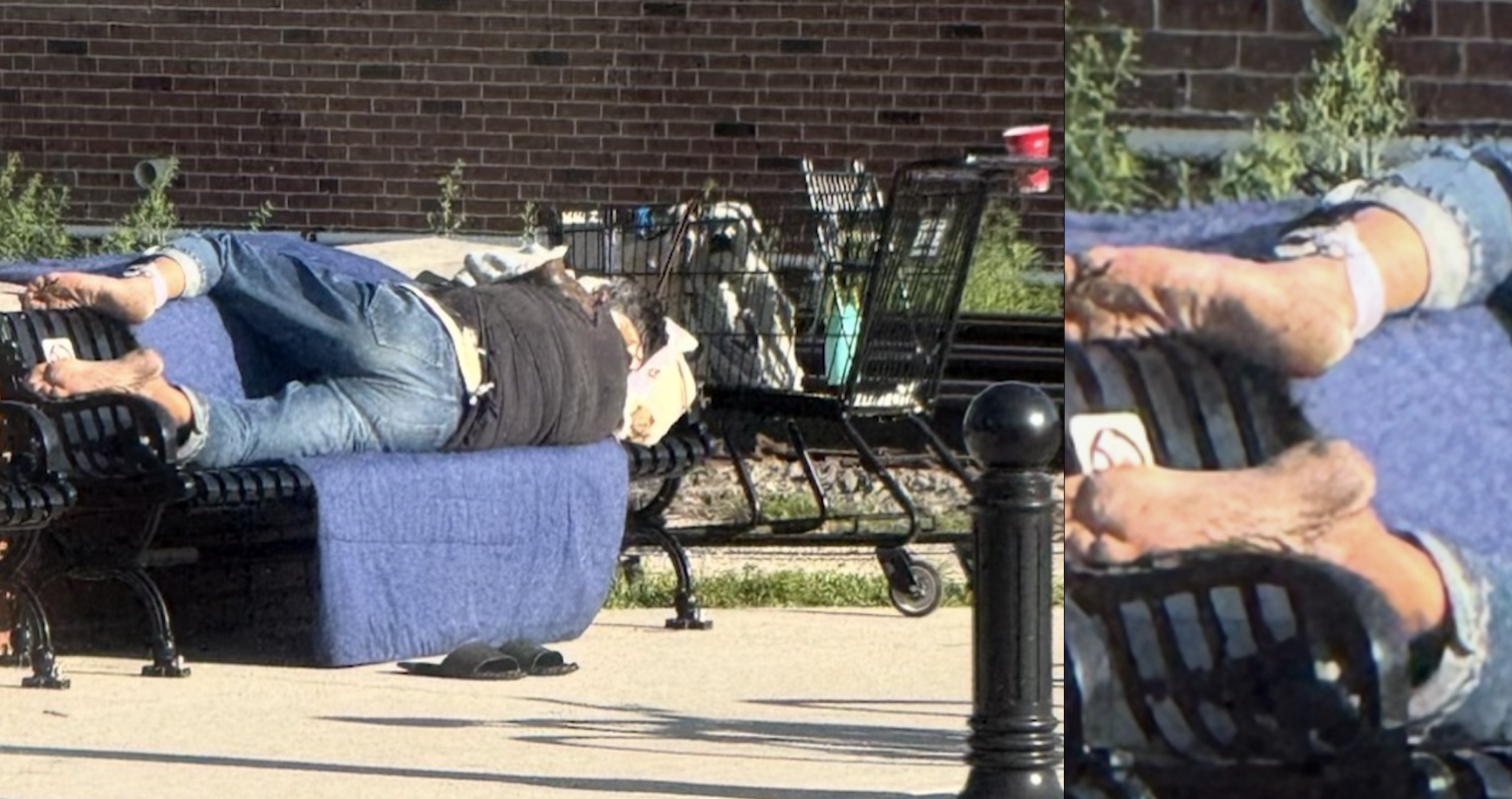
A homeless man sleeps on a bench in downtown Glen Ellyn with his personal belongings nearby. On the right, a close-up shows an ankle monitoring device strapped to his leg. (Provided photo)
Longtime resident Linda Samuta said she has also observed changes in the community.
"We moved to Glen Ellyn for the quaint safe neighborhood and good schools. But times have really changed as we notice more mentally ill homeless walking through our downtown Glen Ellyn,” Samuta told DuPage Policy Journal.
“Recently, while on a walk in the middle of the day, with my husband we encountered a man pushing a grocery cart yelling profanities loudly right behind us. We felt unsafe and walked across the street as he continued to yell angrily.”
After returning home, Samuta said she contacted police but nothing happened.
“Once home, we called the police to report the man, but then never noticed the police respond or do anything about the issue,” she said.
Some locals have indicated they intend to step up their campaign on the issue, including drafting letters and emails to Village President Jim Burkett and Chief of Police Philip Norton.
Residents have rejected what they describe as normalizing the situation in the affluent suburb, where Redfin data shows home values far exceed the Illinois average. The village’s median home value is about $540,000 to $550,000, more than double the state median of roughly $240,000 to $250,000.
Stacy Creswell said homelessness in the village has evolved beyond what residents can address on their own.
“I’ve lived in Glen Ellyn for over a decade and have seen the community compassionately care for the homeless that pass through our streets,” Creswell told DuPage Policy Journal. “Now, however, our community has reached out to our police for help because of the clear safety and mental health component.”
“Although the police have been called numerous times and the village board is aware of the unstable situation, the homeless have been allowed to live on the streets,” she said. “We need more people to call the police with details of what they are witnessing and leave their names so that we can move toward an effective, rational, informed and lasting solution rather than merely observe and wait.”
She emphasized the need for a long-term approach that addresses public safety and the needs of individuals struggling with mental illness.
“Hoping the mentally ill just move on to the next town is not a compassionate answer nor a viable long term village strategy,” Creswell said. “I know Glen Ellyn to be a compassionate community, but it is not compassionate to keep a community hostage to an intensifying problem right as summer hits and our kids are out playing, visiting downtown stores and riding the train, just as it is not compassionate to let the mentally ill live on the streets.”
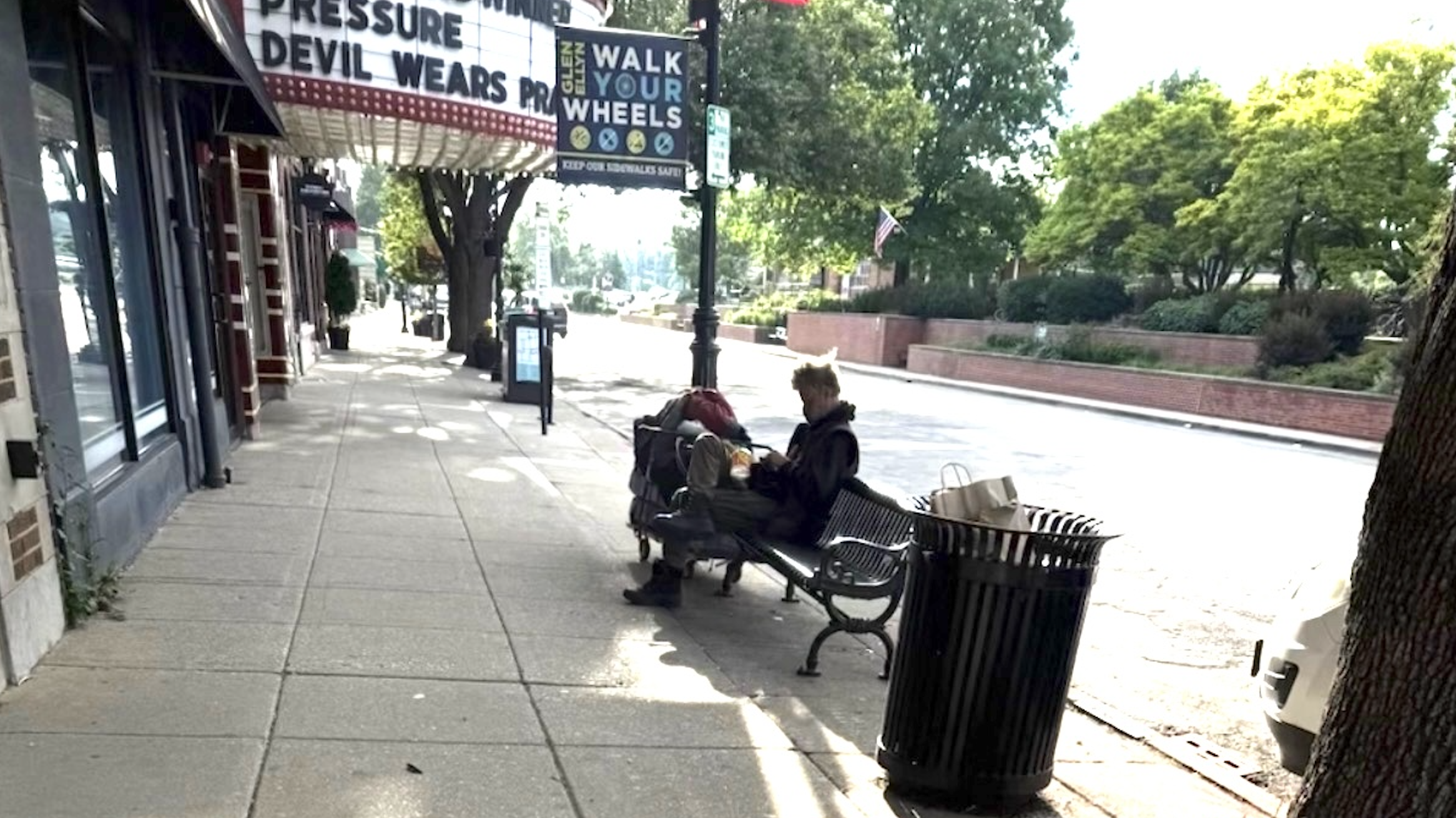
A homeless man sits outside the historic Glen Art Theatre in downtown Glen Ellyn, framed by its vintage 1927 marquee. The scene comes amid growing resident concerns about homelessness and public safety in the downtown area. (Provided photo)
Despite hundreds of millions of taxpayer dollars spent statewide on homelessness, the problem continues to worsen, including in DuPage County, raising questions about the effectiveness of public spending on the issue.
Recent years have seen sharp increases in homelessness, with Illinois figures more than doubling and Chicago’s tripling between 2023 and 2024, according to Connect2Home.
According to the DuPage Foundation, DuPage County has poured more than $5.2 million into DuPage Pads, a local homeless services non-profit, in recent years, including $5 million for the purchase of a former Red Roof Inn in Downers Grove to serve as a shelter and a fresh $200,000 emergency allocation this past winter.
This comes despite DuPage Pads operations in Glen Ellyn previously drawing complaints from residents and businesses about increased homeless activity downtown, prompting village officials to reduce overnight shelter availability after reports of disruptive behavior and discomfort among families and shoppers, as reported by the Chicago Tribune.
ProPublica also reports that top executives at DuPage Pads received over $660,000 dollars in combined compensation in fiscal 2024, with DuPage Pads CEO April Redzic alone earning $223,211, highlighting high salaries within an organization heavily dependent on public grants and donations.
Despite the increased spending, waitlists have exploded, with Redzic herself reporting that DuPage Pads waitlist jumped from around 20 to 87 people, even as they expanded beds.
According to Capitol Illinois News, in 2025 the Illinois Shelter Alliance, including Redzic, demanded another $100 million in state funding on top of the then $290 million annual spend.
This follows years of massive expenditures, including a $90 million increase in 2024 under Gov. JB Pritzker and federal ARPA dollars, which failed to curb the surge.
Concerns have been raised by the U.S. Department of Housing and Urban Development (HUD) about possible waste, fraud and abuse, pointing to heavy reliance on taxpayer funding, ongoing requests for more money and limited transparency about results in a system critics say may promote dependency rather than self-sufficiency.
In an interview with Illinois Answers, Redzic harshly criticized recent HUD reforms under the Trump administration for imposing work requirements, immigration screening and spending caps on permanent housing for the homeless, claiming they would reverse progress despite the reportedly steeply increasing rates of homelessness seen in DuPage County and elsewhere.
Meanwhile, NCTV17 reported Redzic was handpicked as a VIP guest by U.S. Rep. Sean Casten (D-IL), one of the most liberal members of the House Democratic caucus, for President Biden’s 2023 State of the Union Address, where she praised federal support for the progressive agenda in regard to funding organizations like hers.