Conservatives blame political influence in school board elections as D203 faces $12.4M shortfall: ‘Co-opted by the Democratic Party’
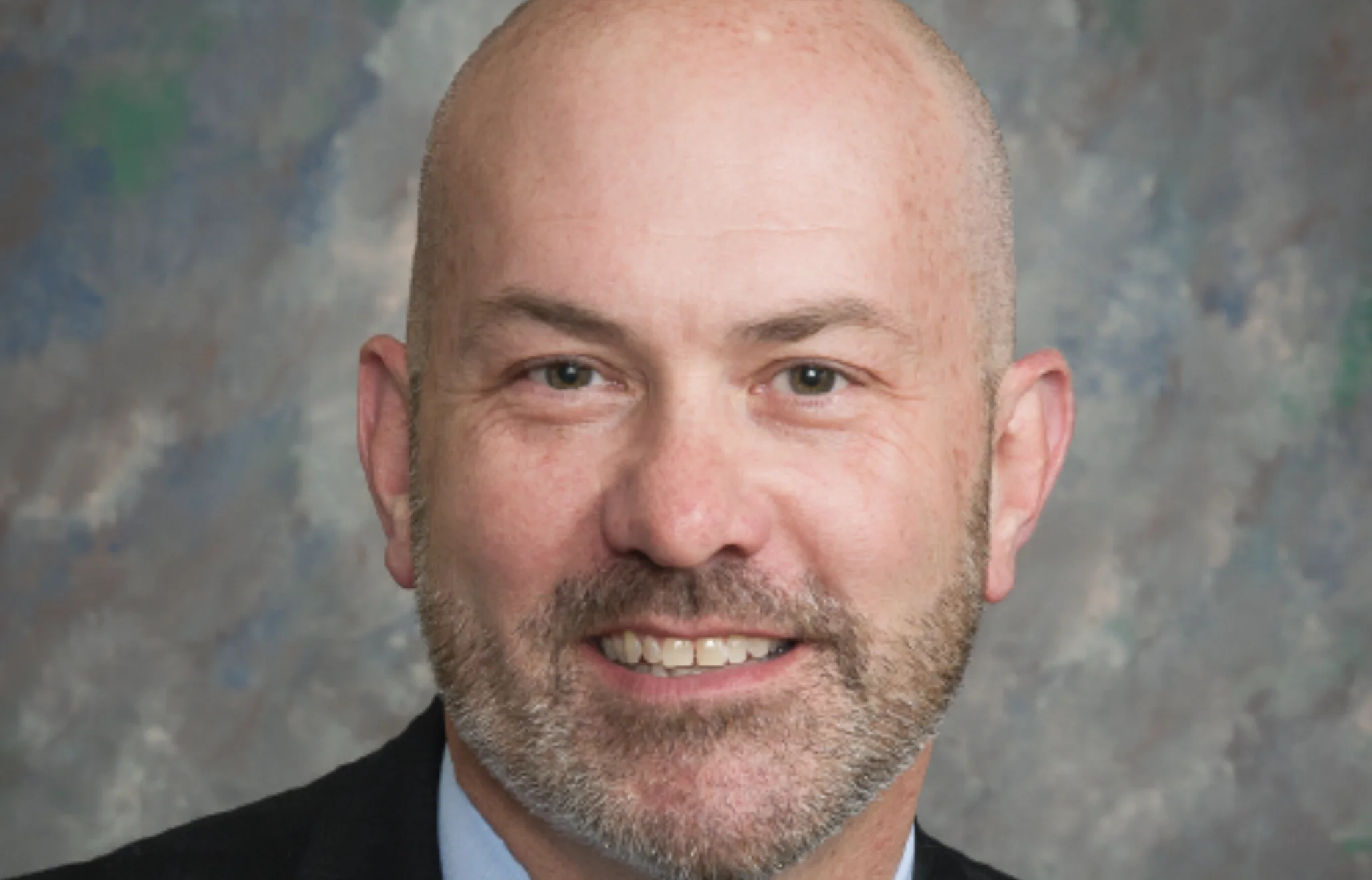
DuPage County GOP Chair Kevin Coyne and other conservative leaders are blaming Democrat-backed leadership in Naperville Community Unit School District 203 for a projected $12.4 million budget shortfall as the district moves forward with a plan to reduce spending.
District officials are moving to cut positions and reduce spending to address the deficit. The plan aims to reduce the fiscal year 2026–27 shortfall to roughly $4 million by eliminating 59 positions, scaling back departmental and school-level spending and avoiding new program initiatives.
Coyne said the district’s financial struggles are tied to increasing partisan influence in traditionally nonpartisan school board elections.
"Our local April elections have been co-opted by the Democratic Party,” Coyne told the DuPage Policy Journal. “School board and council races are supposed to be nonpartisan but they are not anymore because of Democrat meddling.”
Coyne said the district’s budget problems are the result of activist-driven leadership replacing fiscal discipline.
“District 203 is finding out what happens when Democratic activists win elections to important offices ... sound business judgement becomes nonexistent and fiscal messes soon follow," he said.
The Naperville District 203 Board of Education is comprised of President Charles Cush, Vice President Kristine Gericke, and members Holly Blastic, Melissa Kelley Black, Joseph Kozminski, Amanda McMillen and Marc Willensky.
The DuPage County Republicans echoed Coyne’s concerns in a recent Facebook post.
“What a mess,” the DuPage County GOP wrote. “Student enrollment at District 203 has dropped almost every year for 20 straight years. Yet hiring, new programs only grew. They had the money to shell out millions in tax rebates during COVID to save their incumbents. Now when you add it all up they have a large financial mess on their hands.”
“Everyone elected to 203’s school board - for many years now - has been handpicked by the local Democratic Party and teacher’s union. They’ve been a disaster. Even Kelly Black was - who they now censure seemingly every other meeting.”
“Vote for competence and candidates with no ties to the teachers union or local Democrat activists or watch this once great school district implode.”
The commentary comes as Naperville School District 203 Chief Financial Officer Michael Frances presented the proposal to the school board, outlining plans to leave multiple administrative, certified staff and support positions unfilled following retirements and resignations. Additional savings are expected from cuts to professional development, travel, conferences, staff events, software redundancies and planned school bus replacements.
The tentative budget projects approximately $366.2 million in revenue, an increase of 3.39%, and $370.1 million in operating expenditures, up 2.76%. District officials also disclosed a separate $1.6 million deficit in the cafeteria fund that could result in future food-service price increases.
The district’s financial problems have become a rallying point for conservative critics, including Shannon Adcock, founder of Awake Illinois, who published an op-ed titled “Go Woke, Go Broke, Naperville D203’s Path to Financial Ruin," in which she said the district’s fiscal failures are an example of how “school districts prioritize ideology over education.”
“Let's be clear: D203's financial woes aren't a surprise,” Adcock wrote. “The district's five-year forecast has been dipping into the red since at least November 2025, with deficits projected to balloon from $5.25 million in FY2026 to $14.4 million by FY2028 if unchecked.”
She criticized district spending on social-emotional learning and diversity, equity and inclusion (DEI) initiatives.
“Board members demanded nearly $12.4 million in cuts from the upcoming budget, yet they’ve continued to pour money into divisive programs,” Adcock wrote. “This isn’t about math or reading—it’s a ‘digital backpack’ for social-emotional learning (SEL), surveying kids on their feelings and perceptions, often mining data in ways that raise serious privacy concerns under FERPA (Family Educational Rights and Privacy Act).”
Adcock further targeted the district’s DEI office, writing that D203 employs Executive Director of Diversity and Inclusion Rakeda Leaks at “a base salary exceeding $160,000—plus benefits pushing her total compensation well north of that.”
“What do taxpayers get for this?” Adcock continued. “Promotion of events like ‘climate action’ film screenings tied to partisan NGOs and a district mission statement that elevates ‘global citizens,’ ‘empathy’ and ‘equity’ above actual learning.”
“And don’t forget the Lurie Children’s Hospital invoices,” Adcock wrote. “While specifics from FOIA requests reveal ties to gender-related programming and trainings, these expenditures represent yet another layer of non-essential spending funneled into controversial health and identity initiatives.”
Adcock additionally criticized the district’s approval of a $12.3 million transportation center while reducing staffing levels.
“They can find funds for infrastructure but not without slashing teacher positions to balance the books,” she wrote. “This is the ‘go woke, go broke’ playbook in action.”
She argued the district’s broader educational priorities are misplaced.
“Districts like D203 chase trendy ideologies—SEL data mining, equity officers, and gender policies—while academics suffer,” Adcock wrote. “National NAEP scores released in September 2025 showed high school seniors with the worst reading performance since 1992, yet Illinois schools persist in prioritizing feelings over fundamentals.”
Adcock called for major changes within the district, including eliminating DEI programming and ending contracts tied to SEL data collection.
“Start by firing Rakeda Leaks and dismantling the DEI bureaucracy,” she wrote. “Scrap the Panorama contract and similar data-harvesting schemes. Halt all woke staff trainings and refocus on core education: reading, math, science—without the ideological baggage.”
She concluded with a warning about the district’s future.
“Parents and taxpayers in Naperville deserve better than a district that bankrupts itself chasing wokeness,” Adcock wrote. “If D203 doesn’t change course, the deficits will only grow, and so will the exodus of families to districts that put students first.”
Naperville District 203 has long been on the radar of the Dupage Policy Journal.
In 2025, the DuPage Policy Journal published a story noting a federal Title IX complaint against Naperville Community Unit School District 203 arguing the district violated federal sex-discrimination protections by allowing participation without a formal board-approved policy after a biological male student competed on a girls’ junior high track team. The complaint urged the U.S. Department of the Education to investigate and potentially revoke millions in federal funding.