Wayne affirms local control over zoning decisions, adopts resolution to oppose Pritzker’s ‘Section 8 Everywhere’ plan
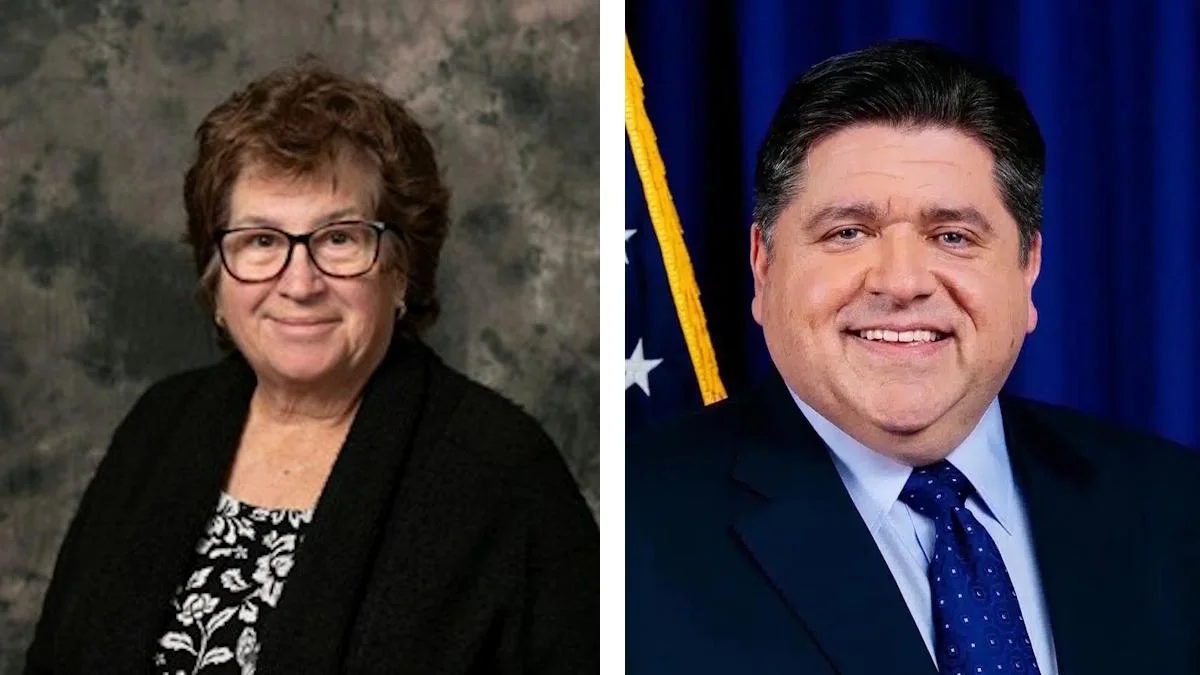
WAYNE — The Village of Wayne has adopted a resolution affirming local authority over land-use and zoning decisions, joining a growing number of municipalities emphasizing home rule control amid ongoing statewide housing policy discussions.
The Village Board approved Resolution No. 26-R-04, “A Resolution of the Village of Wayne in Support of Municipal Housing Authority,” incorporating findings that local officials are best positioned to regulate development standards within the community.
The measure states that the Village “has the responsibility to promote public health, safety and general welfare by regulating land use, density and development standards within the Village,” and outlines zoning authority as a tool for separating incompatible land uses, protecting property values, managing traffic flow, ensuring infrastructure capacity and guiding orderly growth.
Village officials further declared that land-use authority should remain at the municipal level, arguing that such decisions are most appropriately made by local leaders familiar with the community’s “unique characteristics.”
The resolution rejects the premise that locally driven zoning policies are responsible for broader housing affordability or availability challenges, stating that community-led land-use frameworks are not causing a housing crisis.
It also affirms that existing municipal zoning authority is “essential for the continuing community vitality of the Village,” and that it is in the best interest of residents for development decisions to remain under local control.
Under the measure, the Village of Wayne formally urges that zoning and land-use authority remain with municipal officials, rather than being shifted or constrained at higher levels of government.
Under the measure, the village clerk is directed to forward a copy of the resolution to the Illinois Municipal League.
The Illinois Municipal League, which represents all 1,294 cities, villages, and towns in the state, has led the opposition and circulated a model resolution that towns, including Wayne, have adopted. The league has offered its own alternative, the Reducing Expenses and Advancing Local (REAL) Housing Act, an incentive-based plan it says would expand housing without preempting local zoning.
The bills remain pending; a Senate committee took testimony in late April without a vote, and the spring session ends May 31.
Would Pritzker's plan bring more government-subsidized housing to Wayne?
For many residents who packed recent board discussions, the technical debate over zoning preemption comes down to a simpler question: whether the bill would bring more federally subsidized housing — including Section 8 tenants — to Wayne.
Pritzker's proposal itself does not specifically mandate subsidized Section 8 or "affordable" housing.
But HB 5626 would make Section 8 expansion inevitable, deeming multi-unit buildings legal to construct "by right." The law would force single-family neighborhoods to allow apartments whose owners, by state law, aren't allowed to deny them to someone paying with a Section 8 voucher.
Illinois also has a separate law that continually pressures towns to add Section 8 housing.
The "Affordable Housing Planning and Appeal Act," or AHPAA, passed in 2003, requires municipalities where less than 10% of housing qualifies as "affordable" to adopt a plan to add more. Housing developers denied a permit for Section 8 projects in those towns can appeal to a state Housing Appeals Board that can override the local decision.
A 2023 amendment, effective January 2026, broadened who may file such an appeal to include "housing advocacy" organizations, who commonly work with the developers to promote Section 8 projects.
There are currently 44 municipalities, including Wayne, Burr Ridge, Hinsdale, Oak Brook and Elmhurst in DuPage County, that the state claims don't have enough "affordable housing."
Part of the concern reflects the demographic change that has reshaped many inner-ring Cook County suburbs over the past half-century.
In Section 8-heavy Bellwood, for example, U.S. Census figures show the village went from about 1% Black in 1970 to roughly 70% by 1990; as of the 2020 Census, it was about 68% Black and 27% Hispanic, with White residents under 3% of the population. Neighboring Maywood, also a Section 8 apartment hub, was about 60% Black and 34% Hispanic in 2020.
In a City Journal essay arguing for ending the Section 8 program, Manhattan Institute scholar Howard Husock wrote that the vouchers "ruin neighborhoods and perpetuate poverty," and reported that south suburban Cook County had absorbed a majority of the county housing authority's vouchers, citing residents and officials in towns such as Richton Park, Matteson and Riverdale who said the program imported disorder and pushed up local costs.
Critics of Pritzker's plan make a similar argument today: that mandating apartments in single-family areas, combined with Illinois' ban on "source-of-income discrimination," will channel more voucher-based housing into communities that now have little.