Naperville prepares for June 1 "Chicago teen takeover" of its downtown
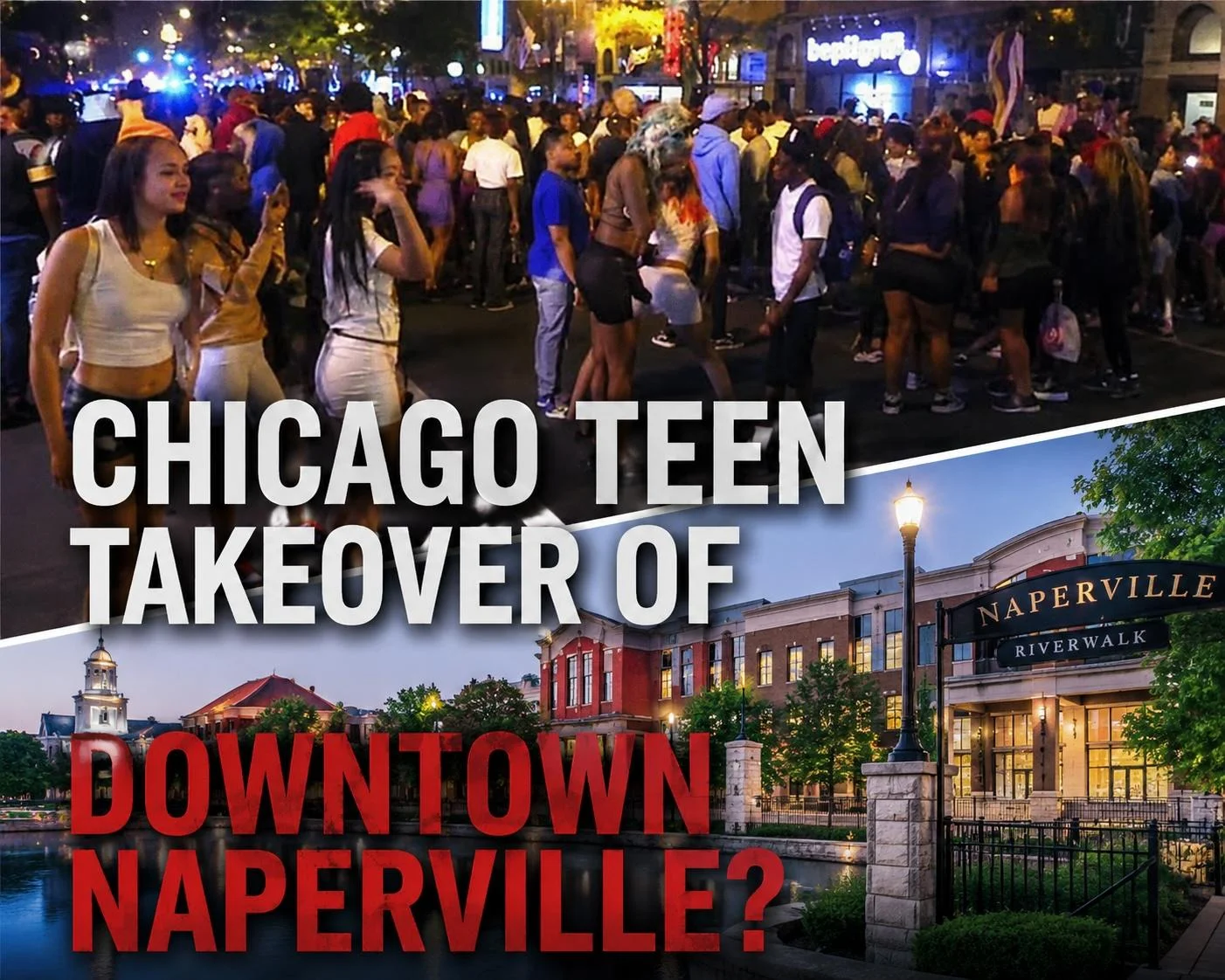
The Naperville Police Department is bracing for a “teen takeover” of the city’s downtown on Monday, June 1, warning that officers will be out in force and that anyone who breaks the law will face “zero tolerance.”
In a statement posted to X on the evening of May 28, the department said it was aware of a teen gathering planned for that Monday and that residents and visitors “can expect to see a significant police presence in and around the downtown area.”
It welcomed those who wish to gather lawfully and respectfully, but warned that anyone engaging in criminal activity, disorderly conduct or acts threatening public safety “will be met with zero tolerance and held accountable to the fullest extent of the law.” The post drew more than 800,000 views within hours.
The gathering it is responding to has been advertised on a social media flyer billing a “Downtown Naperville Teen Takeover” as “the start of summer,” promising good weather and urging attendees to “bring speakers,” “bring y’all whole crowds” and, more pointedly, “don’t be fighting.”
For residents of Naperville and surrounding DuPage County communities, the pitch — and the police response — is familiar. It is the latest installment in a phenomenon that has migrated steadily westward from the Chicago Loop into the western suburbs over the past three years.
A Chicago export
The “teen takeover” — sometimes called a “trend” on the flyers that promote it — is not new, and it did not start in DuPage.
The pattern of large, socially-organized youth gatherings in Chicago traces back more than a decade, to incidents along the lakefront in 2011, and these gatherings have shifted over the years from the Magnificent Mile to Millennium Park to the Loop and the lakefront beaches. Someone designs a flyer with a date and a location, posts it to social media, and the invitation spreads rapidly through reshares.
The meet-ups typically turn violent.
A 2022 gathering in Millennium Park ended with a 16-year-old fatally shot near The Bean, prompting Chicago to move its weekend curfew earlier.
In April 2023, a downtown takeover left two teens wounded by gunfire and bystanders beaten. The events have continued through 2025 and into 2026, with shootings tied to gatherings in Streeterville and debate over Chicago’s 10 p.m. curfew reigniting each spring.
Retired Riverside Police Chief Tom Weitzel has warned that the suburbs were always the next frontier. “When it is happening in the city, they do a really good job of moving people out — well, they are going to come out to the suburbs,” he said. “They post everything on Facebook, TikTok, or Instagram, so you can see it all.”
Naperville becomes the epicenter
In DuPage County, Naperville has been the preferred destinaton.
In May 2025, police reported that roughly 200 teens and young adults gathered downtown on a Friday evening and behaved disruptively, while a separate Saturday meetup of about 100 people involved reckless driving and fireworks on the city’s northeast side.
A 15-year-old Aurora girl was charged with aggravated battery to a police officer, resisting arrest, obstruction and littering, and a 20-year-old McHenry man faced charges including reckless driving and mob action.
By mid-June 2025, Naperville Police Cmdr. Rick Krakow said there had been seven planned teen takeover events in the city since May 1, each drawing varying turnout.
The most serious incident came on June 14, 2025, when an officer conducting extra patrols near Washington Street and Jefferson Avenue stopped a 14-year-old Naperville boy behaving suspiciously and, after a pat-down, allegedly recovered a loaded 9mm semi-automatic handgun from his waistband. DuPage County State’s Attorney Robert Berlin called the allegation that a 14-year-old carried a loaded handgun through a crowded downtown event “extremely disturbing,” and the teen was charged with a Class 4 felony and released to home detention with electronic monitoring. That weekend’s takeover produced five arrests in total.
Officials responded with a mix of enforcement and appeals. Police promised “zero tolerance” for criminal behavior — from trespassing to disorderly conduct to fighting — while urging parents to discourage their children from attending gatherings typically organized on social media.
Mayor Scott Wehrli, in a Facebook message, called the gun incident a “wake-up call,” writing that the city’s kids “need mentors, guidance, support, and, sometimes, someone to step in.”
The Sunset Pool takeover
The most chaotic DuPage incident to date came not downtown but at a swimming pool — and only after teens were turned away from Naperville first.
On Saturday, July 5, 2025, a social media post urged teens to “bring 31st Beach to the burbs” by gathering at Naperville’s Centennial Beach. Naperville police, according to the department, staged officers at the beach preemptively and blocked the gathering before it could take hold; no disturbance occurred there. The crowd then redirected to Glen Ellyn’s Sunset Pool, both departments confirmed.
Glen Ellyn police began receiving calls just before 5 p.m. about a rapidly growing crowd at the Glen Ellyn Park District’s Sunset Pool, at 483 Fairview Avenue. Officers estimated the crowd at 200 to 300 teens and young adults. Police said many entered without paying, and some were smoking cannabis, drinking alcohol and setting off fireworks; parents on site reported teens blasting music over portable speakers. One 911 caller described “a horde of kids” coming in with coolers.
Body-worn camera footage later released showed the scene: an officer calling for “five more cars to Sunset Pool” and warning the crowd, “Everybody out or you’re going to jail.” Bystander video captured a pool manager being pushed into the lap pool while onlookers laughed, and fireworks being dropped from a moving silver SUV in the parking lot. The park district closed the facility early, citing “disruptive and unsafe behavior” and violations of district ordinances, and later told residents, “We share your frustration.”
Despite the size of the crowd, the immediate fallout was limited to one on-scene arrest, for illegally setting off fireworks from a moving car. Nearly two months later, on September 4, police announced a second arrest, charging Alyah R. Collins with battery for allegedly shoving the park district manager into the pool.
One participant said the gathering had started as a meetup for college students home for the summer before it ballooned once it was shared on social media. The sequence — a blocked beach in Naperville, an overwhelmed pool in Glen Ellyn — illustrated how quickly these crowds can relocate when one community hardens its posture, and it put a spotlight on suburban aquatic facilities as a soft target.
That vulnerability has not gone away. Public pools and beaches — facilities that draw large summer crowds, charge admission and rely on small seasonal staffs — proved especially exposed in 2025, and the events of July 5 showed organizers will move from one suburb to the next in a single afternoon. After the incident, the Glen Ellyn Park District said additional security measures would be in place at Sunset Pool “this weekend and in the future, as needed,” and urged residents to report developing gatherings promptly.
With the redirect from Naperville to Glen Ellyn now confirmed by both departments, park districts across DuPage have reason to treat their pools and beaches as potential next stops — and to watch social media for the same warning signs heading into summer 2026.
A recurring summer pattern
What the Naperville and Glen Ellyn experiences share with Chicago’s is a seasonal rhythm: the gatherings cluster around the start of summer, are advertised on flyers nearly identical in style to the one circulating this week, and place suburban police departments in the position of managing crowds that materialize with little warning.
Communities elsewhere have experimented with alternatives to arrests — in Chicago’s Hyde Park, parents and school staff lined a street where a takeover was planned to greet arriving teens, a tactic Chicago Police Superintendent Larry Snelling has praised on the theory that many teens fear being recognized by their parents more than by police.
Naperville’s own response has been notably consistent.
The language in the department’s May 28 statement — “zero tolerance” for those who threaten public safety, accountability “to the fullest extent of the law” — closely tracks what Cmdr. Rick Krakow told the public nearly a year earlier, during the June 2025 wave, when he promised “zero tolerance for any sort of criminal behavior, from trespassing to disorderly conduct to fighting.”