Op-ed: McCloy: ‘Hart benefitted from Republican voters, only to abandon those principles entirely’
By any honest measure, Illinois is bleeding families, small businesses, and common sense.
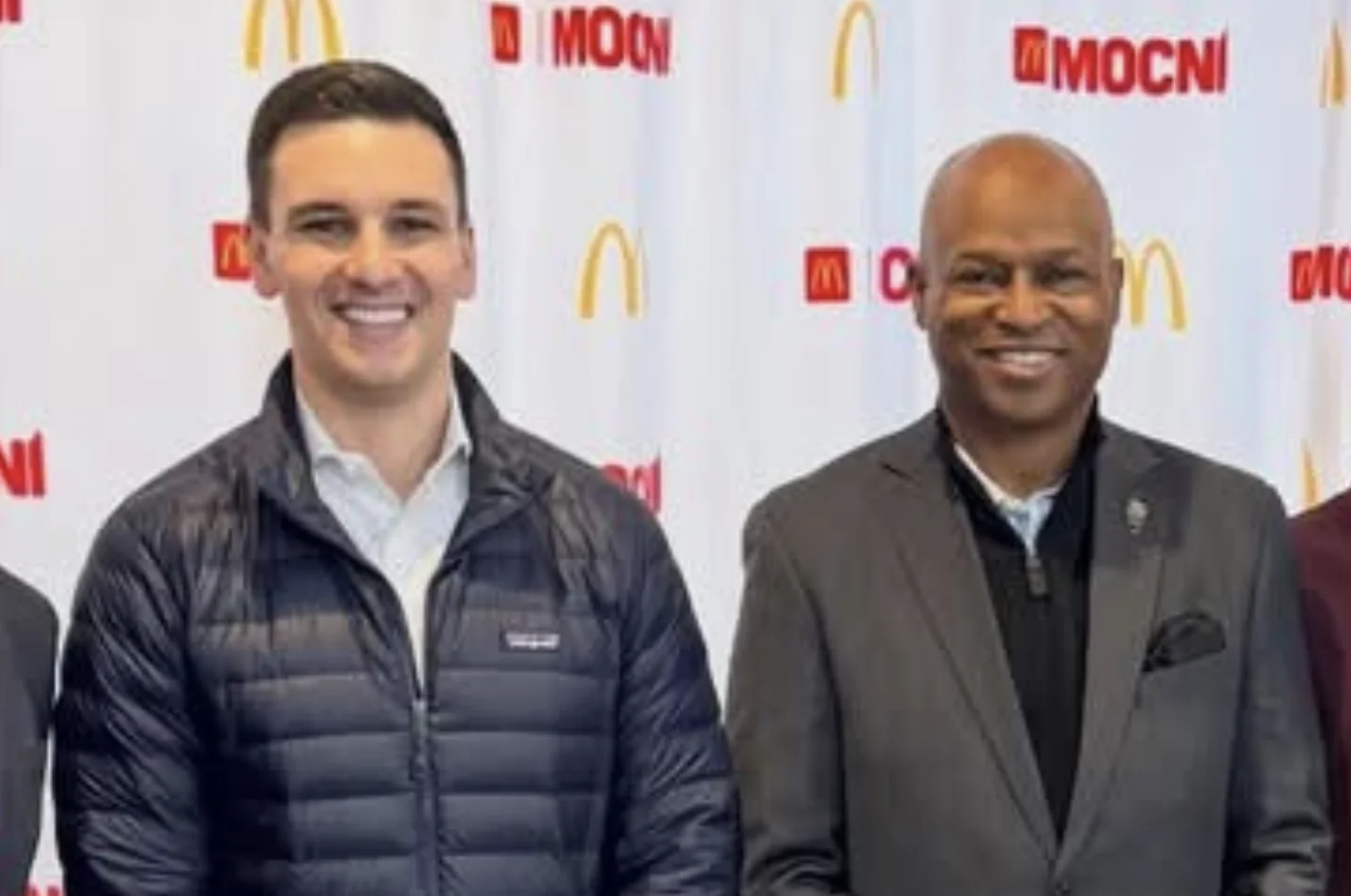
Against that backdrop, residents of Hinsdale recently watched their mayor smile for photos, shake hands, and kiss babies with Emanuel “Chris” Welch, the most powerful Democrat in Springfield and the architect of many of the policies driving residents and employers out of Hinsdale and out of Illinois altogether.
The gathering took place at a “Coffee and Conversation” event hosted by Welch at McDonald’s on York Road in Hinsdale in early February.
"Great to see you, Speaker! Enjoyed the discussion," Hart said on LinkedIn after the event.
Hart’s schmoozing with Welch was neither accidental nor harmless.
When Hart appears alongside the Speaker of the Illinois House, it sends a clear message to residents that Welch’s record is acceptable, even commendable. This is political normalization, not simple civility, and for many families it feels like a slap in the face. For Hart, however, it is familiar territory: public pandering dressed up as bipartisanship in service of his own political ambitions.
Hart’s Betrayal: From Republican Beneficiary to Democratic Insider
Hart was once appointed to the DuPage County Board as a Republican by Dan Cronin, a figure long criticized as a left-leaning Republican. Hart benefitted from Republican voters, only to abandon those principles entirely.
Even as he now brags on his official website about being “consistently regarded as the most bipartisan member of the DuPage County Board,” the reality is that his politics have moved steadily left.
Today, Hart is a registered Independent who openly embraces Democratic leadership, Democratic priorities, and Democratic ideology.His public alignment with Welch is not an aberration. It is the logical endpoint of a political evolution that reveals he was never truly a Republican to begin with.
That alignment is not just rhetorical. Hart and Welch are taking money from the same Democrat-aligned labor PACs. That’s not “bipartisan.” That’s the political machine. The donors are the same, the agenda is the same, and Hart is clearly positioning himself inside the same Democrat power structure Welch runs. For a mayor who once ran as a Republican, accepting money from the same Democrat union political apparatus that bankrolls Welch makes his political direction unmistakable.
Those labor PACs are not fringe players. They are part of the broader union-driven funding network that dominates Illinois Democratic politics — the same ecosystem that routinely backs Springfield leadership and Chicago Democrats. The machinery is shared, the priorities align, and the influence flows through the same channels of organized labor and government-dependent interests.
Welch’s Illinois: Out-of-Control Spending and Taxpayer Pain
Welch, for his part, is not a rank-and-file legislator casting symbolic votes. As Speaker of the House, he controls the legislative agenda, committee assignments, and which bills move or die. Nothing major passes without his approval, and nothing controversial survives without his protection. Cozying up to Welch is not about cooperation or local advocacy. It is about power — and Hart appears eager to be seen in its orbit.
Since Welch assumed the speakership in January 2021, Illinois did not drift into decline — it was driven there. State government expanded substantially under his watch. Illinois general fund spending increased by roughly $3.8 billion in his first three years as Speaker, with even higher spending approved after that. These budgets did not move by chance. They advanced because Welch controlled the calendar and the votes.
At the same time, Illinois families were offered little to no meaningful tax relief. Under Welch’s leadership, Illinois has remained one of the highest property-tax states in the nation. Homeowners pay a higher share of their home’s value in property taxes than residents in almost any other state.
So while Springfield spent billions more, middle-class families were squeezed harder. Property taxes climbed. Fees multiplied. Small businesses absorbed mandate after mandate. Employers left. Families followed.
Small businesses, in particular, have been buried under compliance costs. During Welch’s tenure, Illinois enacted statewide mandates such as the Paid Leave for All Workers Act, requiring employers to provide up to 40 hours of paid leave per employee each year. For a small business with ten employees, that can mean $8,000 to $10,000 annually in new costs before payroll taxes or replacement labor. During this same period, Illinois has continued to rank among the worst states in the nation for small-business climate according to the National Federation of Independent Business.
Chaos in the Courts: SAFE-T Act Puts Suburbs at Risk
Welch’s grip on power extended to criminal justice. He presided over one of the most sweeping criminal-justice rewrites in state history: the SAFE-T Act. He voted yes on HB 3653 and, as Speaker, ensured it moved, survived backlash, and remained largely intact. Republicans warned the law would weaken consequences and endanger communities. Those warnings were dismissed.
Welch went further, publicly characterizing criticism of the SAFE-T Act as “fear-mongering” and “lies,” accusing opponents of “race baiting,” and framing resistance as an attack on a bill he claimed was designed to help “Black and brown people.” Rather than engage with public-safety concerns raised by law enforcement and families, Welch waved them away as politically motivated.
The consequences eventually reached the suburbs, time and time again. In January 2026, a downtown Hinsdale boutique was burglarized after police interrupted a break-in. Four suspects were arrested. Three were released shortly afterward under Illinois’ pretrial release rules, despite facing burglary and retail-theft charges. The DuPage County State’s Attorney’s Office confirmed the outcome was driven by state law, not local discretion.
Hinsdale police did their job. Springfield’s system sent the suspects right back out.
More troubling still, one of the suspects was already on SAFE-T Act release for a prior burglary at the time of the Hinsdale incident — precisely the scenario critics warned about when cash bail was eliminated and detention standards were narrowed.
Radical Policies, Identity Politics and Broken Families
Welch’s role in Illinois’ decline becomes even clearer when examining where taxpayer dollars have gone. Under Welch’s speakership, Illinois has authorized more than $2.5 billion in taxpayer-funded spending on migrant and non-citizen programs, including healthcare, emergency housing, shelters, and support services. While families in Hinsdale struggle with soaring property taxes, public-safety concerns, and rising costs of living, Springfield found billions for people who entered the country illegally — all through budgets that advanced because Welch controlled the House.
Welch also voted for and helped advance legislation allowing non-U.S. citizens who are authorized to work to serve as police officers in Illinois, a move Republicans fiercely opposed. Supporters framed it as a workforce measure. Critics warned it blurred the line between citizenship and law-enforcement authority at a time when public trust is already strained. Once again, Welch sided with ideology over common sense and used his power to see the bill through.
Alongside these decisions, Welch consistently prioritized identity-based ideology over core government responsibilities. He championed legislation embedding DEI mandates into major policy packages, often sidelining concerns about cost, effectiveness, and results.
That same ideology is openly embraced by Hart. He highlights DEI initiatives on his official website, touting his role in “spearheading first-of-its-kind” minority- and women-owned business enterprise programs. As a DuPage County Board member, Hart publicly praised diversity initiatives, partnerships with the NAACP, and advocated for creating a full-time diversity and inclusion director position within county government.
Education policy followed the same trajectory. Welch voted yes on HB 246, which amended Illinois law to require public schools to include LGBTQ content as part of required instruction, K-12. That vote helped make Illinois one of the few states where such instruction is mandated by statute rather than left to parents or local school boards. Notably, both Welch and Hart send their own children to private schools while championing policies imposed on other families. Hart has promoted and attended LGBTQ events, waved flags, and praised LGBTQ and BLM causes as “social impact.”
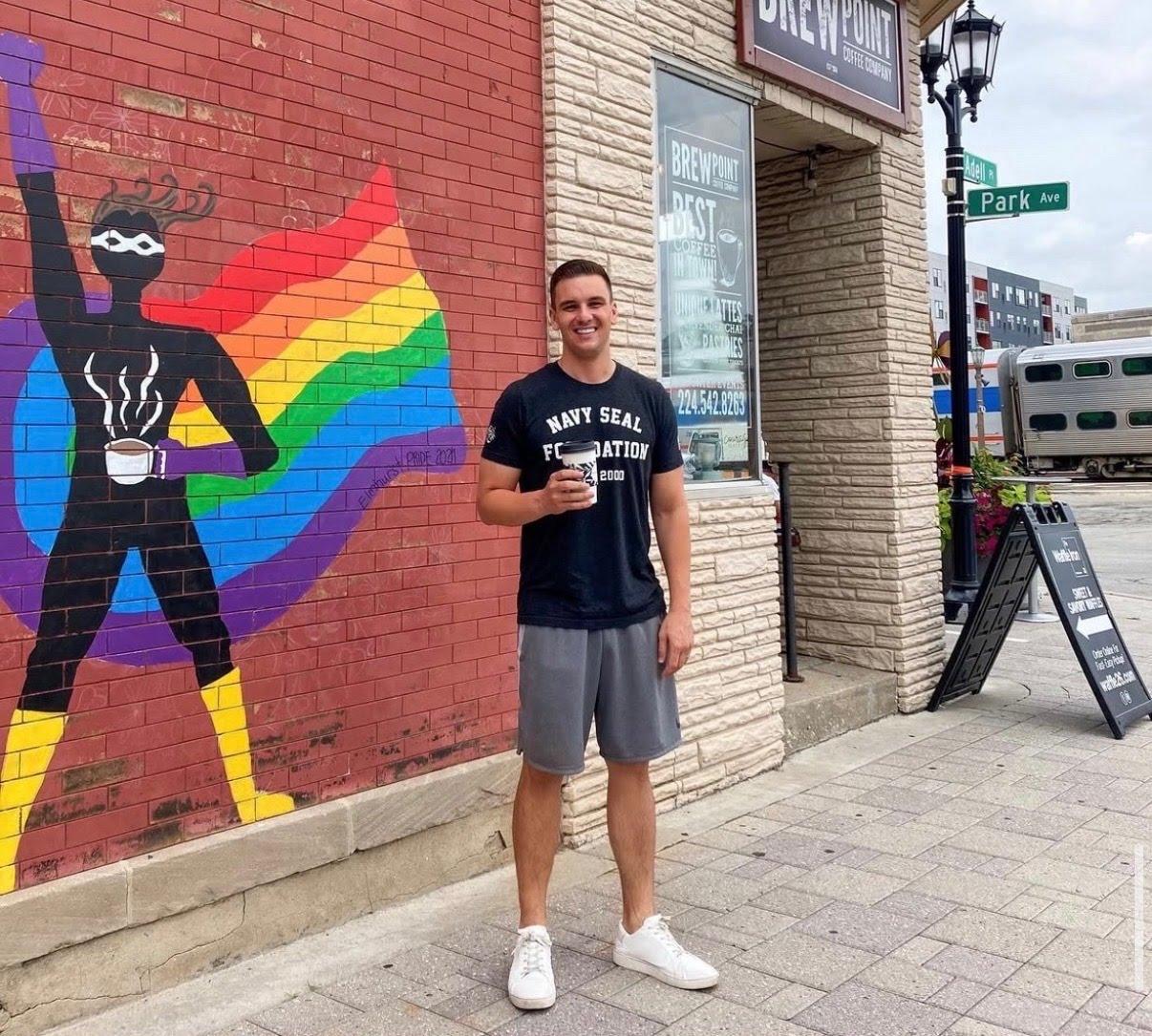
Hart in a photo op in front of an overtly political mural downtown. (Kristina McCloy)
As Speaker, Welch later protected and expanded a legislative agenda that doubled down on these priorities across education, workforce policy, and state government.
Under his leadership, Illinois also advanced policies making it easier to change sex markers on birth certificates and state records and expanded state support for so-called “gender-affirming care,” often over parental objections. Families who raised concerns were dismissed. Many chose to leave.
Welch has aligned himself closely with national Democratic leadership, publicly praising President Joe Biden for “putting our country first time and time again.” Hart has echoed that praise, publicly thanking Biden for his service — further underscoring where his political loyalties now lie.
None of this happened quietly. None of it passed by accident. These policies moved because the Speaker allowed them to move — and because local officials like Hart chose to normalize, celebrate, and align with that power.
Hinsdale is a community built on hard work, family, and stability. Watching its mayor cozy up to the man who has been at the wheel of Illinois’ decline strikes a nerve.
Illinois did not fall apart by chance. It was shaped by deliberate choices, driven by leadership at the top, and enabled by politicians who abandoned their voters to chase relevance inside the Democratic machine.
Voters notice. Parents notice. Taxpayers notice.
And more and more of them are done pretending this is normal.
– Kristina McCloy is a Hinsdale resident and the founder of Concerned Parents of Illinois